2014年10月 3日 (金)

高1PS(Peace Studies):人権学習第1回

平和を実現するために必要な人権感覚を部落差別問題から学びます

部落差別について知る①

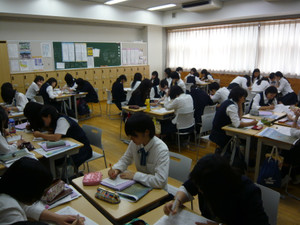
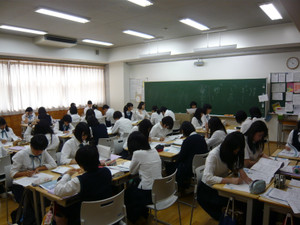
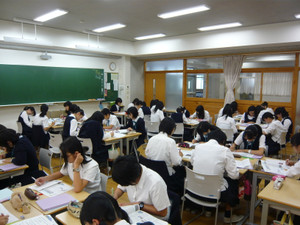
二学期の高1PSは、平和を実現するために必要な人権感覚を部落差別問題から学びます。

今日は、導入として映像資料を視聴した後、部落差別の歴史について学びました。

その後、「もしも部落差別について教えられなければ(知らなかったら)、部落差別はなくなるか」という意見に対して、どう考えるかをそれぞれがまとめました。

各自真剣に考え、いろいろな意見が出てきました。

意見は各クラス単位でまとめ、同じクラスの生徒がどんな意見を考えたのかを次回のPSで共有します。


10th Grade Peace Studies: Human Rights Study Part1


To achieve peace, students study a sense of Human Rights through discrimination against outcast.

Become aware of a discrimination against outcast – Part1


In Peace Studies during the second term, 10th Grade students study a sense of Human Rights, which is important to achieve peace, through cases of discrimination against outcast.  Today, first we watched a documentary film on discrimination against outcasts, and then we learnt the history of it.  Next, we each summarized their thoughts on a question, “If we never knew/never been taught about the discrimination against outcasts, would it disappear?”


They worked on the subject very earnestly and found many opinions within themselves.  Opinions will be summed up in each class and shared among the class to find out what other classmates thought next PS lesson.

2014年9月19日 (金)

「新しい21世紀のありかた」とは?

English translation is given below.

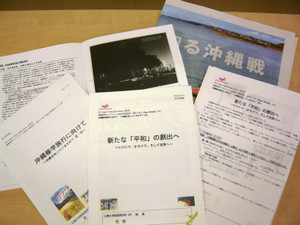
今日、高校2年生は、沖縄修学旅行に向けた最後のPS(PeaceStudies)を行いました。

沖縄について「知る」ことが、「ヒロシマ」を「知る」ことにつながる。

それが、「オキナワ」の理解を深めていく…。

そんなPS(PeaceStudies)でありたいという想いで作成したテキストです。

P1040088

しかし、「オキナワ」を「知る」ことで終わったのでは、前に進みません。

よって、今日は「新しい21世紀の日本のあり方」とは何かをテーマに議論しました。

「あらたな『平和』の創出」のために、自分は何ができるのか?

重いテーマ。

しかし、今の私たちが真摯に向き合わなくてはならないテーマです。

Today, 11th Grade students had final Peace Studies prior to the school trip to Okinawa.

‘Awareness’ of Okinawa leads to the ‘awareness’ of HIROSHIMA. 

Then, that awareness deepens the understanding of OKINAWA…

These study materials for Peace Studies were created with such thoughts.


 (photo)


Though, just ‘knowing’ OKINAWA brings us nowhere.

Thus, today, we discussed on what ‘the new way of Japan in 21st Century’ should be.

What can we do to ‘create new PEACE’?

A very heavy theme, however, the theme which we are required to face with sincerity now.

2014年9月12日 (金)

高2 PS(PeaceStudies) 修学旅行1カ月前!

English translation is given below.

高校2年生の修学旅行が1ヶ月後迫ってきました。

今日は、今学期初のPS(PeaceStudies)でした。1学期に学習した内容の復習と総まとめです。

各クラス、グループに分かれて学習を進めています。

P1040076_2P1040075_2P1040072_2

他者を知ることがすべてのスタートです。

来週は、今までの学習を活かし、私たちに何ができるのかを考えます。

より充実した修学旅行にするために、高2の生徒のみなさんがより一歩前進することを期待しています。

One month to go for 11th Grade before they go on the school trip.

Today, they have the first Peace Studies lesson of the term.  Revision and roundup for what they studied during Term 1.

They study in small groups in each class.


(Photo)


To be aware of others is the starting point.

Next week, we discuss about what we can do based on what we’ve learnt so far.

To make the most out of our school trip, 11th Grade students are expected to go a step beyond.

2014年8月27日 (水)

高1PS(Peace Studies):カンボジア現地研修に向けて

English translation is given below.

3月のカンボジア現地研修に向けて

カンボジア現地研修の下見に行ってきました。 

今年度末3月、高1の希望者でカンボジア現地研修に行く予定です。その下見に8月18~22日の日程で行ってきました!

夜、シェムリアップ(アンコールワットのあるカンボジアの地方都市)に着きました。日本のホテルより広くて快適です・・・。


気候は広島市内より少し暑いという程度でした(3月はもっと暑くなるようです)。

1日目はシェムリアップでの下見です。朝から、人々がとても生き生きと生活している様子が見られます。

現地の小学校、高等学校の校長先生と面談、山本日本語教育センターでの授業見学、地雷博物館、孤児院を訪問し、3月の交流についてのお願いをしてまわりました。

そして、アンコールワットです!

「世界一美しい世界遺産」と言われ、クメール民族の最大の誇りであるアンコール遺跡群。異文化を理解し、現地の方々と交流するためにも、遺跡視察はどうしても外せないものと考えます。本当に素晴らしいものでした。ぜひ、実際に生徒のみなさんにも見てほしいです。

2日目の午前中、飛行機で首都プノンペンへ移動しました。

午後から、王立プノンペン大学のロイ・レスミー先生の研究室に3月の交流会のお願いに行きました。

大学では、1学期の高1PSカンボジア学習で講演をしていただいた、オク・ソッケンさんと、うれしい再会ができました。

次にカンボジア内戦の歴史を記録に残す活動をしているNGOを訪問し協力依頼した後、キリングフィールドを視察しました。

3日目も首都プノンペンです。

トゥールスレン博物館、インターナショナルスクール、ヒロシマハウスを訪問し、3月の現地研修への協力をお願いしてまわりました。

そして、3日目の夜、帰国のために出発・・・。

最後に、日本語ガイドさんとその会社の方たちと記念写真です。


ガイドさんたちは、山本日本語教育センターの卒業生です。本当に優秀な方たちで、快適で充実した下見となりました。

たった3日間の滞在でしたが、それでも多くのことを考えさせられました。

きっと高校生たちが現地へ行くと、もっと多くのことを感じ・学び・考えることでしょう。人生の軸となるような「問い」を、現地で見つけてくる生徒もいるかもしれません。

年度末の本番も楽しみです!

We went to Cambodia to organize a field trip.  


In March 2015, selected 11th Grade students have a field trip in Cambodia. We visited there from 18 August to 22 August to look over and organize this field trip.


We arrived at Siem Reap (a local city near Angkor Wat, Cambodia).  The hotel room is larger and more comfortable than Japan...


(Photo1)


The climate there was just a little hotter than Hiroshima, though it will be much hotter in March.


On Day1, we looked around Siem Reap.  We saw lively local people from the early morning.


(Photo2)


We met a principal of a local primary school and high school, observed lessons at Yamamoto Japanese Education Centre, visited Land Mine Museum and an orphanage, and arranged our field trip there in March.


Afterwards, we went to Angkor Wat!


(Photo3,4)


Angkor Wat is described as “the world’s most beautiful World Heritage” and the pride of Khmer.  It is impossible to leave out Angkor Wat to understand Cambodian culture and to communicate with local people.  It was really impressive.  Therefore, I would really like students to visit there.


We moved to Phnom Penh, the capital of Cambodia by air in the morning of Day2.


In the afternoon, we visited the office of Ms Loch Leaksmy at Royal University of Phnom Penh and asked to have a meeting with our students in March.


(Photo5)


At the university, we had a surprise meeting with Mr Sokhen Ouk who had a lecture for 11th Grade students in high school as a part of Cambodia study at Jogakuin in Term1.


Next we visited an NGO, which is recording history of Cambodian civil war, and requested their assistance in March and viewed the Killing Fields.


We continued to stay in Phnom Penh on Day3.


We visited Tuol Sleng Museum, International School, and Hiroshima House and arranged our visit there in March.


(Photo6)


Then, on the third night, we left to return to Japan.

Before leaving, we took photos with Japanese interpreters and their colleagues.


(Photo7)


The interpreters were graduates of Yamamoto Japanese Education centre.  There were really brilliant and thanked to them, our journey was very comfortable and extremely rewarding.


We stayed only 3 days in Cambodia but it turned out to be such a deep and thoughtful journey.


When our students visit there, they will feel, learn and think many things.  Some may find a life changing question there.

We are looking forward to the real thing in March!
2014年8月23日 (土)

SGH研究発表会

English translation is given below.

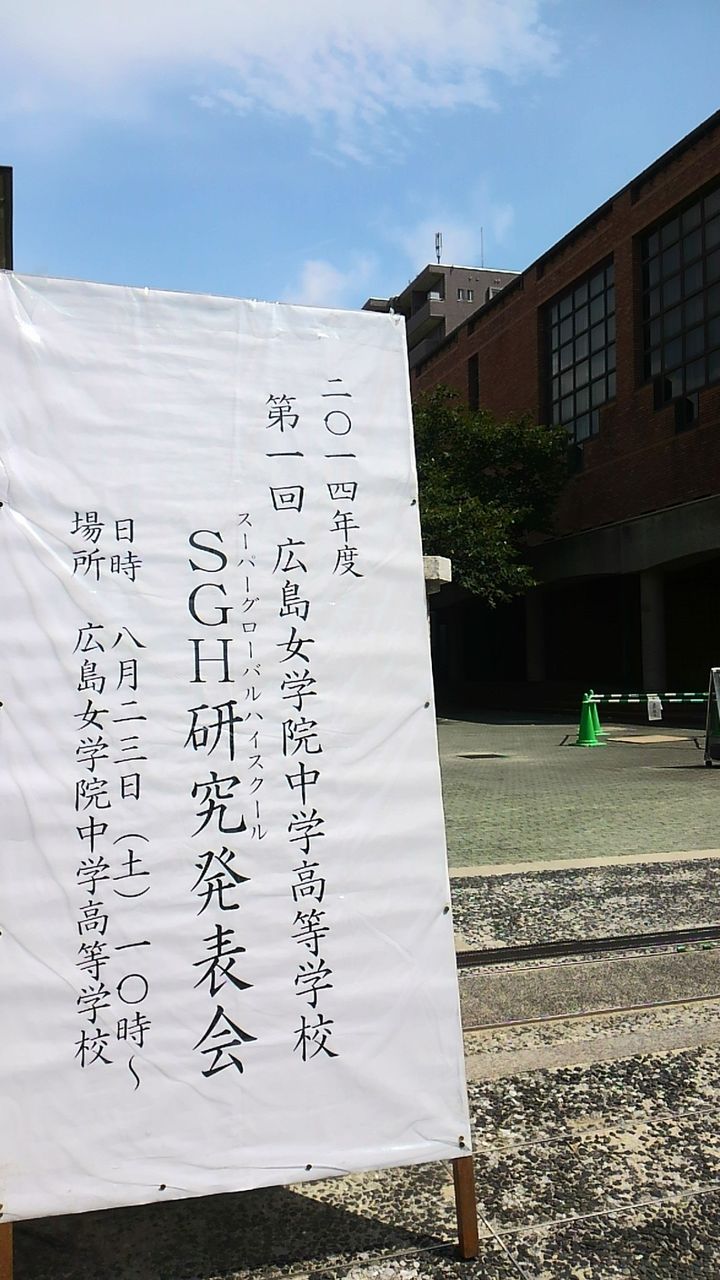
本日、SGH指定校としての研究成果発表会を開催しました。
全国各地から約130名の参加者があり、盛大な研究会となりました。

20140823_134612_Android

本校がSGH構想に基づき、どのような教育を実践しているかのご紹介に加え、著名人をお招きして、パネルディスカッションと分科会を行いました。

基調講演は、IGS学院長で本校のグローバル教育アドバイザーの福原正大先生です。

Dsc_0201

その後は、本校の1学期間のSGH教育実践の報告です。Dsc_0212

 *モントレー国際大学院主催の Critical Issues Forum に参加した2名の発表。

Dsc_0213

NPT(核不拡散条約)再検討会議 第3準備委員会を傍聴した2名の発表。

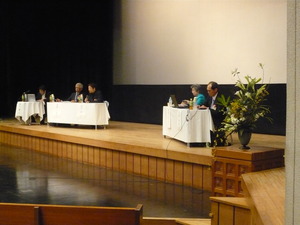
午後のパネルディスカッションは、超豪華メンバーで行われました。

 司会者:関西国際大学学長 濱名篤 先生
 パネラー:
   英語検定協会アドバイザー 佐伯一行 先生
   水王舎代表 出口汪 先生
   広島男女共同参画財団理事長 長尾ひろみ 先生
   広島市立大学教授 広島平和研究所副所長 水本和実 先生

P1040036

パネラーの先生方から、それぞれの専門分野から「グローバル人材」についてお話していただいた後、司会の濱名先生から、鋭い切り口でパネラーの先生方への質問がありました。
議論も白熱し、ディスカッションに参加された先生方からも「面白かった!」と。
聴いている参加者のみなさんも、いつの間にか議論の中に入り込んでいたのではないでしょうか。

最後の分科会は、5つ分野に分かれて行いました。

 ①広島女学院中学高等学校のSGH構想プログラムについて
   (助言者:水本和実先生)
 ②広島女学院中学高等学校の海外研修プログラムについて
   (助言者:濱名篤先生、長尾ひろみ先生)
 ③「論理的思考力育成」について
   (講師:出口汪先生)
 ④これからの英語教育について
   (講師:佐伯一行先生)
 ⑤グローバル人材の育成について
   (講師:福原正大先生)

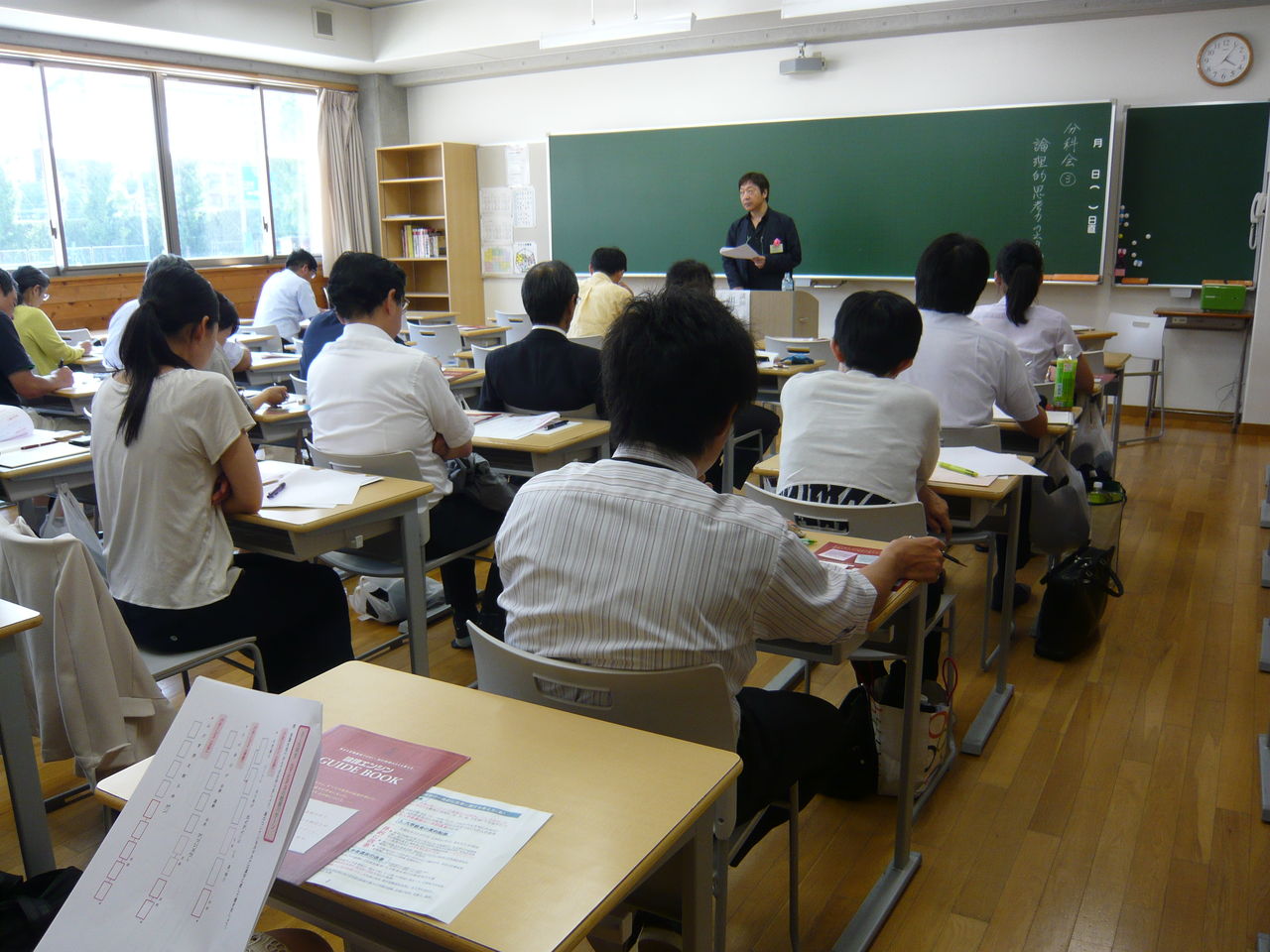
P1040040
  *写真は分科会③ 出口汪先生による講演です。

論理的言語能力がなぜ必要かというお話から、グローバル人材に「なぜ、論理的言語能力が必要か」といった話題にまでふれていただきました。また、「論理的言語能力」を培うためには、どういった学習が必要かといった視点で、参加者の私たちも実際に問題を解きました。

出口先生の新刊「あたまがよくなる漢字」からの出題です。

気がつけば、終了時刻の午後5時。あっという間の7時間でした。

20世紀型の教育(知識の伝達型教育)をどう21世紀型(子供たちがグローバルな課題に主体的に取り組む教育)に変えていくか。これが、今の教育界に課せられた大きな課題です。

SGH指定校は、その課題に先陣を切って挑戦する学校であると改めて感じた1日でした。
お忙しい中、参加してくださった先生方、教育関係者の皆様、本当にありがとうございました。

SGH Workshop


Today, we hold a workshop as a SGH designated school.

The workshop was successful with 130 people attending from all over Japan.


(Photo1)


We introduced our education style based on our SGH ideas, invited prominent educationalists for panel discussion and a separate meeting in 5 different groups.


Our global education advisor Mr Masahiro Fukuhara, a head of IGS made an opening lecture.


(Photo2)


Afterwards, we reported our SGH style lessons during Term1.


(Photo3)

*Two students who attended Critical Issues Forum at Monterey Institute making a presentation.


(Photo4)

* Two students who sat in a committee meeting of NPT conference of third session reporting the experience.


The panel discussion in the afternoon, we had splendid panelists.


Chairman: Mr Atsushi Hamana, President, Kansai University of International Studies

Panelists:

  Mr Kazuyuki Saeki, Advisor to Eiken Foundation of Japan

  Mr Hiroshi Deguchi, CEO, Suiohsha Ltd.

  Ms Hiromi Nagao, Director, Hiroshima Gender Equal Opportunity Foundation

  Mr Kazumi Mizumoto, Vice-president, Hiroshima Peace Institute, Hiroshima City University


First, each panelist made speech on “global human resources” from their specialty aspects, and then, Mr Hamana made sharp questions to panelists. The discussion was incredibly heated and the panelists later commented that it was enjoyable.  It was so intense the audiences seemed to be immersed in the discussion.


Finally, they divided in to 5 groups and had separate-interests meeting in each group.


  1. SGH program of Jogakuin; Mr Kazumi Mizumoto as a mentor
  2. Foreign Field Trip Program of Jogakuin; Mr Atsushi Hamana & Ms Hiromi Nagao as mentors
  3. “Cultivation of Logical Thinking”; Lectured by Mr Hiroshi Deguchi
  4. Future English Education; Lectured by Mr Kazuyuki Saeki
  5. Developing Global Human Resources; Lectured by Mr Masahiro Fukuhara


(Photo5)

*Scene from the group 3 lecture by Mr Deguchi.


Mr Deguchi explained why we are required logical linguistic skill to why global human resources are required to have logical linguistic skill.  Also, we were informed what kind of practice was necessary to develop “logical linguistic skill” and based on that knowledge, we tried solving problems.


The problem was selected from Mr Deguchi’s latest publication “Atamaga Yokunaru Kanji (Chinese Characters to Train Your Brain)”.


By then, it was already 5 o’clock.  Time passed so quickly…it had been 7 hours since we started this event.


How we change the 20th century style education (i.e. passing down the knowledge) to the 21st century style education (i.e. students proactively working on global problems).  That is the biggest challenge the current field of education faces.


I renewed the sense of duty we have as a SGH designated school to take the leading role for this challenge.


We thank teachers and people from education field very much for taking time and attending this event. 


2014年8月21日 (木)

Peace Forum 2014

English translation is given below.

8月7日、本校においてPeace Forum 2014を開催しました。名称は今年からPeace Forumとしていますが、実質6回目の実施です。そもそもの始まりはハワイにあるPunahou School(オバマ大統領の母校)がHiroshima Peace Scholarshipを設立したことでした。厳しい選考を経て選ばれた奨学生の高校生2名が広島に派遣され、その研修を女学院が全面的に協力しています。内容はホームステイ(本校生徒宅)、碑めぐり案内、核廃絶署名活動、そして交流会です。

この交流会(Peace Forum)にはプナホウの生徒だけでなく、韓国の中高生(韓国の全国レベルの日本語スピーチコンテスト入賞者)など外国の生徒、国内も県内外の生徒が参加しています。今年は沖縄尚学、盈進中高(福山)、武田中高からの参加がありました。総勢約80人!

毎年、校外の有識者や専門家の方をお招きし、高校生に平和問題に関するお話をして頂いています。今年は本校卒業生で国連政務官の荊尾(かたらお)遥さん、荊尾さんの上司で国連アジア太平洋軍縮センター長のシャロン・リグルさん、広島平和文化センター前理事長のスティーブン・リーパーさんが来て下さいました。それぞれの立場から、現在世界が抱えている問題や高校生にできること、高校生が実際にやっていることへの激励など、参加生徒が更に意欲的になれるような力強いメッセージを頂きました。

今回のフォーラムから内容を少し変えました。それぞれの学校は与えられた二つのトピック(集団的自衛権、歴史教育)のうち一つを選び、それについてリサーチをしたうえで、より良い状況を目指すために参加高校生が今後取り組むAction Planを提案します。そして、来年のフォーラムまでそれぞれの学校で取り組み、成果を発表しあいます。今回のアクションプランは「核廃絶署名活動を学校で取り組む」「平和のメッセージを表明するバナー(写真参照)を作る」などです。このアクションプランに至るため、異なる学校間でディスカッションをして、アイディアを出し合いました。英語でディスカッションをするグループもあり、悪戦苦闘しながらも、話し合いが成立する充実感も感じたようです。

さて、来年はどのような成果を持ち寄ることができるでしょうか? See you next year!

Cimg0796

Cimg0772

Cimg0784

Peace Forum 2014


On 7 August, Peace Forum 2014 took place at Jogakuin.  We changed the name to Peace Forum from this year, though this was the 6th forum we had.  It started when Punahou School (President Obama is an alumnus) founded Hiroshima Peace Scholarship.  Two scholarship students who went through very tough selection process come to Hiroshima and Jogakuin assists fully their field work including home stay at Jogakuin students’ home, a Peace Monuments tour, joining our campaign and collecting signatures for a petition for nuclear disarmament and a forum.


For the forum, we had not only from Punahou but foreign students such as South Korean students who won Japanese speech contest at national level, as well as domestic students from Okinawa Shogaku, Eishin Junior&High School in Fukuyama, and Takeda Junior&High School this year.  In total, there were 80 participants!


Every year, we invite key figures and specialists to lecture on peace issues for students.  This year, we had Ms katarao, an officer at UNRCPD, and her supervisor and Director of UNRCPD, Ms Sharron Riggle, and Mr Stephen Leeper, a former director of Hiroshima Peace Culture Foundation.  They lectured from their ground on the current problems our world face, what students can achieve, what students have achieved so far and gave strong messages and encouragement for them to carry on their work to build a peaceful society.


We changed the style of forum this year.  Each school made a choice from two topics , the right of collective self-defense or history education, research on the topic they selected and suggest their action plan to build a better society.  Then, each school will work on the plan and make a presentation on their activity and result next forum.  The action plan includes “involving their school by collecting signatures for petition for nuclear disarmament” and “creating a banner inscribes peace messages” (see picture below).  To reach these action plans, students from different schools discussed and exchange ideas.  Some groups struggled to discuss in English but they found the experience extremely rewarding to reach conclusions somehow.


I wonder what achievement we can hear from them at the next forum.  See you next year!


2014年7月31日 (木)

沖縄尚学高等学校との交流会に向け

English translation is given below.

広島発ANA1861便。

広島デルタ上空です。

Kimg0177

69年前、この広島デルタに世界で初めて原子爆弾が投下されました。

今日は、修学旅行において「平和」をテーマに交流会を行う、沖縄尚学高等学校にお邪魔しました。SGH指定校の取り組みの一環です。

6/13のブログにも書きましたが、複雑な問題を抱える広島と沖縄。

「平和」を構築していくには、広い視野から物事を見つめることが不可欠です。

沖縄の同世代の人たちが、「平和」をどのように捉え、「平和」な社会をどう創出しようとしているかを知り、議論交わすことは、広島女学院生にとっても貴重な経験になるはずです。

交流会の会場となる講義室に入ると、広島女学院で開催されるPeaceForum(8/7)に参加する2人の生徒さんが、プレゼンテーションの準備をしていました。

課題は「集団的自衛権」とは。私を案内してくださった佐久田先生としばし雑談。

Kimg0189

沖縄尚学高等学校と広島女学院高等学校との交流が進み、次世代の「平和」を創出する人材がどんどん出てくることを願ってやみません。

Kimg0192高台にある沖縄尚学高校からは那覇市内が一望できます。

灰色の空。台風12号が接近しています。

明日、帰れるのでしょうか…。

(photo 1)

ANA1851 - Hiroshima to Okinawa.

Delta of Hiroshima from the sky.

69 years ago, world’s first A-bomb used and exploded over this delta.


Today, I am visiting Okinawa Shogaku High School where our students are visiting to discuss on “Peace” during our school trip to Okinawa in October.  This is a part of SGH project.


As mentioned on 13 June, Hiroshima and Okinawa have very complicated issues.  To build “Peace”, it is vital for us to have a broad view.


It will be a very valuable opportunity for Jogakuin students to know what students in Okinawa think about “Peace”, how they believe they can create a “Peaceful” society, and to debate with them.


At a lecture room where we will be having a meeting when our students visit here, two students are preparing a presentation for Peace Forum in 7 August at Jogakuin.   


(photo 2)


The topic is “What is Right of Collective Self-defense”.  They chat with Mr Sakuda who's been taking me around the school.


I hope our association with Okinawa Shogaku continues and many students become peace makers of next generation. 


View of the city center of Naha from Okinawa Shogaku High School, which is located on a hill.


(photo 3)


Gray sky.  Typhoon is getting closer.

Is my flight alright…

2014年7月30日 (水)

過去記事のご紹介 ~国連本部(ニューヨーク)への派遣

English translation is given below.

本校では6年前より「核廃絶! ヒロシマ中高生による署名活動」に取り組んでおります。この活動が平和首長会議と広島市より高く評価され、外務省の「ユース非核特使」を委嘱されて、ニューヨークの国連本部に派遣されました。NPT(核不拡散条約)再検討会議第3準備委員会の会議を傍聴し、自分たちの活動についての報告をするのが目的です。

また、ニューヨークの小学生や高校生とも交流する機会もありました。たった4日間の滞在でしたが、この派遣団の活動は高く評価され、帰国後も報告会や国連要人との面会などが相次ぎ、参加した生徒は受験勉強の合間を縫って大忙しな日々を送っています。

ニューヨークからのレポートは現地より8本、アップしました。4月28日~5月3日です。

どうぞこちらからご覧ください。

Old Articles – Sending Jogakuin Students to UN HQ (NY)


Past 6 years, Jogakuin has been working on “Nuclear Abolition Now! Signature Drive by Junior and Senior High School Students”.  City of Hiroshima and Mayors for Peace highly recognized our work and we have been appointed as “Youth Communicators for a World without Nuclear Weapons”, and selected students visited UN Headquarter in NY.  They were to sit in a committee meeting of NPT conference of third session and report our activities.


They have opportunities to meet and communicate with primary and high school students.  It was only 4 days but this trip was very well acknowledged.  After returning to Japan, they are keeping themselves busy by having lots of appointments such as reporting the visit at city hall and a meeting with UN leading figures. They are fitting in these special opportunities between studies for university


There are 8 articled upped from NY between 28 April and 3 May. Click here for these articles.

2014年6月20日 (金)

高1PS(Peace Studies):カンボジア学習第5回

English translation is given below.

高校1年生はカンボジアについて学んできました!

カンボジア学習のまとめ

 高校1年生のPSカンボジア学習は、今日がまとめの時間となります。

まず第3回のエキスパートグループでの学びを、各ホームグループで共有しました。


その後、「平和を創り出すために」をテーマにそれぞれ学習を通して考察したことをまとめました。

また、広島大学の先生とコスタリカからの留学生がPSの様子を見学されました。

【生徒の考察から】

広島で育った私にとって平和について考えるのは毎年のことでした。「戦争をなくそう」「平和な世界」といったワードを毎年聞いていました。でも本当の平和とは自分たちが幸せならば成立するのでしょうか。今回こうしてカンボジアの歴史について学んできましたが、わたしは初めて聞くような内容ばかりでした。読み書きできれば殺され、国から出ようとすれば殺され、1日中働かされるのに食べる物がなかったポル・ポト政権時代。5・6年生の小さな子どもが銃を持っていたり、ご飯もなくわずかな睡眠時間確保のために自分のまわりに地雷を仕掛けていたりした内戦時代の話。どの話も驚きでした。怖かったです。そう考えるとこの世界の中でわたしが笑っている間に泣いていた子がいたのかもしれないし、もっと言えば戦争や飢餓によって亡くなった子もいたのかもしれません。目先の自分たちの“平和”を考えるだけではなく、もっと世界に目を向けて、世界の現状を知る必要があると思いました。


全五回という限られた時間でしたが、カンボジア学習から、多くを学び・気づき・考えることができました。

世界に目を向け、自分を見つめ直す“きっかけ”となったことでしょう。

年度末(3月)には、カンボジア現地研修(希望者)を予定しています。

研修参加者は2・3学期にカンボジアに関する学びを一層深化し、現地研修やその後の活動につなげていきます。

カンボジア学習は終わりますが、高1のPSは新たなテーマで2学期も続きます!

10th Grade PS (Peace Study): Cambodia Study - Part5

Summary of Cambodia Study:

Today, we had the last lesson on Cambodia Study for 10th Grade PS and reviewed what we learned so far.

First, we shared what we studied in expert groups on the 3rd lesson in each home group.

(Photo1)

(Photo2)

Afterwards, they summarized their findings on “how to build a peaceful society” throughout the lessons. 

A teacher from Hiroshima University and a student from Costa Rica visited to observe their lesson today. 

[From students’ work]

It is natural for me to think about peace every year as I grew up in Hiroshima.  I heard phrases like “Peaceful World”, and “End War” every year.  However, I wonder whether true peace is achieved only when we are happy.  We’ve been studying about Cambodia and these facts were very new to me.  Cambodian people were killed because they were literate, and they were killed because they tried to leave the country.  Under Pol Pot government, there was no food even though you worked very hard all day.  During the civil war, children at primary school age were carrying guns, had no food and placed land mines around themselves to have little sleep.  Every single story was shocking.  I was terrified.  While I was laughing, someone in the world might have been crying, moreover, there may be children died from war and starvation.  I realized just thinking about “peace” around us was not enough at all, but I found it was essential to know the real state of current world by having a wider view towards the world.

We had only 5 lessons for Cambodia Study, but we learned, became aware of and thought a lot from these lessons.

These lessons may help students to see the world and find themselves.

We plan to have a field trip to Cambodia in March 2015 for those who are interested.  Students who will attend the field trip continue to study the subject further to expand the knowledge for the field trip and future activities.

This is the end of Cambodia study but 10th Grade Peace Studies continue with a new subject!

2014年6月13日 (金)

高1PS(Peace Studies):カンボジア学習第4回

English translarion is given below.

高校1年生はカンボジアについて学びます!

講演「平和を創り出すために」

今日の高校1年生のPSは、市内のカンボジア料理店「ミリア・アンコール」店長で、少年兵として内戦を経験されたカンボジア人のリー・サルーンさんと、青年海外協力隊としてカンボジアで活動をされた鍵山彩さんに講演をしていただきました。 

サルーンさんは小学5年生くらいの時に無理やり少年兵にされたこと、その内戦での体験は、ずっと心に残っていること等、実際に経験した人でしか語れない内容を語ってくださいました。


また、鍵山さんからはカンボジアでの生活の様子や、青年海外協力隊としてカンボジアに渡り、図工、音楽、体育などの情操教育を現地の小学校教員に指導する活動された経験を聞かせていただきました。

最後に、一人ひとりの小さな行動によって世界を変えることが出来る、と語ってくださいました。 

【生徒の感想より】

「カンボジアについてたくさん知れてよかったです。カンボジアは微笑みの国だと初めて知りました。写真に写っている人皆笑顔で素敵な国だと思いました」

「30代の若い世代の人たちがカンボジアでは内戦を経験していたことを知った。日本にいるから戦争は昔のことだと思っていたが、そうではないことに気付いた」

「日本での「あたり前」は、他のところではあたり前ではないのかもしれない。そのことに気づくためには、日本以外の異文化を知る必要があると分かった」

「他国・他文化を知ることで、自分たちの今を見つめ直すことができ、大きな平和には直接結び付かなくても、身近な平和にはつながると思いました。また、他文化を知り、大切にしているものを尊重することが世界の平和につながると思います。」

「生きるということはあたり前ではないことが分かった。日々の生活の仕方を見直すことも平和をつくるということにつながると思う。」


今日の講演の様子は、明日の中国新聞に掲載されます。 

次回は、「カンボジア学習から考える」をテーマに、カンボジア学習のまとめをします!


10th Grade Peace Studies: Cambodia Study Part4

Lecture “To Achieve Peace”

We invited Mr Saroeun Ry and Ms Aya Kagiyama and had lecture at Gaines Hall.  Mr Ry is an owner of “Mealea Angkor”, a local Cambodian restaurant and had an experience on fighting as a child soldier during the civil war, and Ms Kagiyama used to work in Cambodia as Japan Overseas Cooperation Volunteers.

Mr Ry talked about his experience which only actually experienced can tell such as how he was forced to be a child soldier when he was around 10 years old, and the memories from the civil war never faded.

(Photo1)

Next, Ms Kagiyama explained how people in Cambodia lives and her experience teaching crafts, music, and physical exercise for emotional development as a staff of Japan Overseas Cooperation Volunteers.

(Photo2)

At the end, she told us our little action has the power to change the world.

[Feedback from students]

“I am glad to know about Cambodia.  I never new Cambodia was a country of smile.  I found Cambodia a lovely country seeing people all smiling in photos.”

“I’ve learnt Cambodian as young as 30s had experienced the civil war.  Living in Japan, I thought the war was the past, but I realized it was not.”

“Normal in Japan doesn’t mean normal in the other countries.  I found it was important to know other cultures to be aware of that.”

“Understanding other countries and cultures will help to know ourselves.  Even though we may not be able to achieve a worldwide peace, it may lead us to a peace around us.  To understand other culture and value what they think important to them will lead to a peace in the world.”

“I realized being alive is not just given.  I think even reviewing how we live everyday will lead to build a peaceful society as well.”

The lecture today will be reported on tomorrow’s issue of Chugoku Shinbun.

Next, we will review our Cambodia Study through the topic “Expand your view from Cambodia Study”!